
The Seven Positive and Seven Negative Emotions That Shape You
Seven_positive_and_negative_emotions

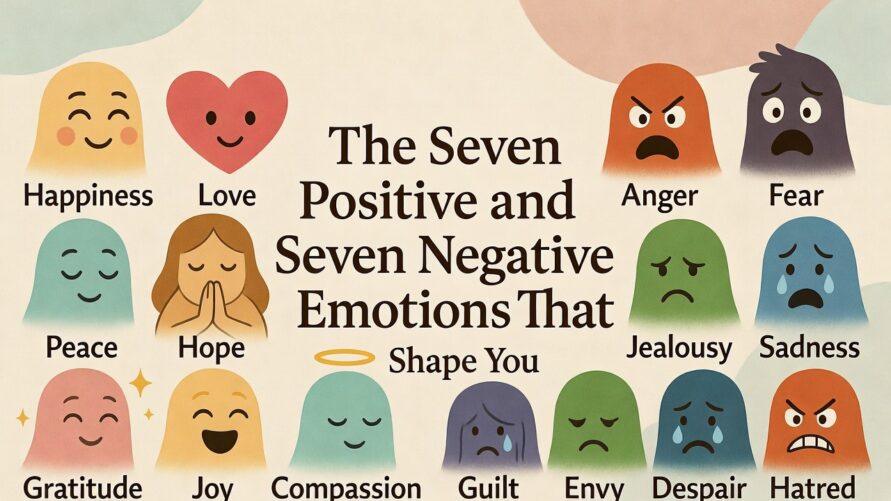
There are seven major positive emotions and seven major negative emotions. The negatives voluntarily inject themselves into the thought impulses, which insure passage into the subconscious mind. The positives must be injected, through the principle of auto-suggestion, into the thought impulses which an individual wishes to pass on to his subconscious mind. These emotions, or feeling impulses, can be compared to yeast in a loaf of bread since they supply the essential ACTION element that converts thought impulses from a passive to an active state. Therefore, one can clearly see why thought impulses that are thoroughly mixed with emotion are acted upon far more readily than those merely originating in “cold reason.”

The Seven Positive Emotions

1. The Emotion of Desire

This is the starting point of all achievement. It’s a burning, obsessive want for a definite goal or outcome, not a vague wish, but a white-hot, definite purpose backed by emotion. Hill calls it the fuel that launches everything else. Without strong desire, no other principle works. When mixed with faith and persistence, it becomes unstoppable.

2. The Emotion of Faith

Faith is visualized belief – the “eternal elixir” that gives life, power, and action to thought impulses. It’s the state of mind where you absolutely know your desire will manifest, even before evidence appears. Hill says faith can be cultivated through repeated autosuggestion (affirmations) and visualization. It’s one of the three most powerful positives (along with love and sex) because it connects your thoughts directly to Infinite Intelligence.

3. The Emotion of Love

Love is a deep, harmonious feeling toward others, self, or a cause free of selfishness. It brings harmony to the mind and body, stimulates creative imagination, and removes fear. When combined with other emotions (especially sex and romance), it elevates thinking to higher levels. Hill notes love as a major force for positive mental attitude and subconscious programming.

4. The Emotion of Sex

This refers to the powerful sexual urge/desire, which Hill describes as by far the strongest human emotion and the most intense mind stimulus. When properly channeled (through the process of “sex transmutation”), it can therefore be redirected into creative and productive energy rather than being confined to mere physical expression. Highly developed sex natures correlate with genius-level achievement, courage, imagination, and persistence. Blended with love and romance, it produces profound harmony and super-achievement.

5. The Emotion of Enthusiasm

Enthusiasm is contagious energy and excitement being “inspired” or “possessed by a god” (from the Greek root). It’s the vibrant, lively feeling that makes you magnetic to others and keeps you motivated during challenges. Hill sees it as essential for influencing people (e.g., in sales or leadership) and sustaining effort toward goals.

6. The Emotion of Romance

Romance is the feeling of adventure, mystery, wonder, and beauty in life often tied to love and sex but broader. It keeps the mind youthful, imaginative, and open to new ideas. Hill associates it with the poetic, idealistic side of human nature that inspires art, invention, and extraordinary effort. It’s what makes ordinary pursuits feel magical.

7. The Emotion of Hope

Hope is the sustaining belief that better things are possible and coming. It provides resilience during setbacks, keeps the mind optimistic, and prevents despair. Hill views it as a gentle but persistent positive force that supports faith and desire over the long term.

The Seven Negative Emotions

1. The Emotion of Fear

Hill calls fear the most destructive and widespread negative emotion. It paralyzes reason, imagination, self-reliance, enthusiasm, and initiative; breeds indecision, procrastination, and failure; destroys ambition, personality charm, and love; invites misery and disaster. He dedicates a full chapter to the “six basic fears” (poverty, criticism, ill health, loss of love, old age, death), which all stem from this root.

How to overcome it – Recognize fears as mere states of mind with no real power unless you grant it. Build faith through repeated autosuggestion and visualization of success. Cultivate a burning desire for a definite purpose, this crowds out fear naturally. Act despite fear (action dissolves it), and surround yourself with positive influences/people to reinforce optimism.

2. The Emotion of Jealousy

An insecurity-driven resentment toward others’ success, possessions, or relationships. It poisons the mind, destroys harmony, undermines self-confidence, and blocks creative thinking and cooperation.

How to overcome it – Shift focus to your own definite goals and desire. Practice gratitude and appreciation for others’ achievements (this builds positive emotion). Replace envy with admiration or inspiration, ask, “What can I learn from their success?” Use love and enthusiasm to foster genuine connections instead of comparison.

3. The Emotion of Hatred

Intense, consuming dislike or hostility that drains energy, clouds judgment, attracts negativity, and repels opportunities/people. It kills finer emotions like love and blocks subconscious harmony.

How to overcome it – Consciously choose forgiveness or indifference, holding hatred hurts you more than the target. Fill the mind with love (the most powerful positive) through acts of kindness or focusing on harmonious relationships. Redirect energy toward constructive pursuits tied to your major purpose.

4. The Emotion of Revenge

The obsessive desire to “get even,” which traps the mind in the past, prevents forward progress, and wastes mental energy on negativity instead of creation.

How to overcome it – Let go by focusing on future-oriented hope and desire. Understand that true power comes from rising above revenge keeps you chained to the offender. Practice detachment: visualize success and abundance for yourself, making past wrongs irrelevant. Replace it with purposeful action toward your goals.

5. The Emotion of Greed

Uncontrolled, excessive desire for more (often at others’ expense), leading to unethical decisions, dissatisfaction, isolation, and eventual loss. It distorts values and blocks true abundance.

How to overcome it – Channel desire constructively toward a definite, ethical major purpose. Cultivate love and generosity give value to others, and abundance follows (Hill’s principle of going the extra mile). Practice gratitude for what you have; this shifts from scarcity/greed to appreciation and attracts more.

6. The Emotion of Superstition

Irrational beliefs, fears, or reliance on luck/omens instead of reason and self-reliance. It undermines faith in yourself/Infinite Intelligence, breeds doubt, and blocks decisive action.

How to overcome it – Build rational faith through evidence of your own efforts and autosuggestion. Study facts, rely on definite plans, and trust in cause-and-effect (your thoughts/actions shape reality). Replace superstition with knowledge and persistent, organized planning.

7. The Emotion of Anger

Explosive loss of control that damages health, relationships, judgment, and reputation. It invites retaliation and blocks calm, creative thinking needed for success.

How to overcome it – Pause and breathe when anger arises, acknowledge it without acting on it. Redirect the energy into enthusiasm or constructive action (e.g., channel it into intense work toward your goal). Build self-discipline through daily positive habits; surround yourself with calm, positive people to reduce triggers.

Selected Value: 5

DisclaimerI express my own views in this article after reading the book, without intending to offend anyone. I do not sponsor or endorse anyone, and any resemblance to actual persons, living or dead, is purely coincidental. The mentioned link is an affiliate link, and purchasing the book through it is a great way to support me if you’d like to read along!

EA00199